

Facing the aftermath of a road traffic accident in the United Kingdom can feel confusing and overwhelming. When medical bills pile up and time off work becomes reality, knowing your rights to compensation matters more than ever. Understanding the process of claiming after an accident empowers you to seek fair financial support, hold negligent parties accountable, and start focusing on recovery with confidence.
Table of Contents
- What Does Claiming After An Accident Mean?
- Key Types Of Accident Claims In The UK
- How Personal Injury Claims Work Legally
- Essential Requirements And Time Limits
- Financial, Emotional, And Legal Impacts
- Common Pitfalls And Claim Process Mistakes
Key Takeaways
| Point | Details |
|---|---|
| Claiming Rights | Individuals in the UK can pursue compensation for injuries and damages sustained in accidents caused by another party’s negligence. |
| Time Limits | Most personal injury claims must be initiated within three years from the incident or from when the claimant becomes aware of the injury. |
| Importance of Evidence | Gathering comprehensive evidence, such as medical records and witness statements, is crucial to substantiate a claim. |
| Financial and Emotional Support | Successful claims provide financial support to manage recovery and can aid in restoring quality of life, addressing both medical expenses and psychological impacts. |
What Does Claiming After an Accident Mean?
Claiming after an accident represents a legal pathway for individuals to seek financial compensation for injuries or damages sustained through no fault of their own. When an unexpected incident occurs that results in physical harm or financial loss, victims have the right to pursue recompense from responsible parties.
In the United Kingdom, accident compensation claims serve several crucial purposes:
- Provide financial support for medical treatments
- Cover lost wages during recovery
- Compensate for pain and suffering
- Hold negligent parties accountable
- Help victims restore their quality of life
The claiming process typically involves several key steps. First, you must establish that another party was responsible for your injury. This could involve road traffic accidents, workplace incidents, or public space accidents. Evidence is crucial – medical records, witness statements, and incident reports help substantiate your claim.
Under UK law, most personal injury claims must be initiated within three years of the incident. The legal system provides mechanisms for individuals to seek justice through no win, no fee arrangements, which reduce financial risk for claimants.
A successful claim can provide critical financial support during challenging recovery periods, helping victims manage unexpected expenses and rehabilitation costs.
The process varies depending on the type of accident and injury severity. Minor road traffic injuries, for instance, can be claimed through the Official Injury Claim service, while more complex cases might require solicitor representation.
Pro tip: Document every detail of your accident immediately, including photographs, medical reports, and witness contact information to strengthen your potential compensation claim.
Key Types of Accident Claims in the UK
The United Kingdom provides legal avenues for individuals to seek compensation across various accident scenarios. Vehicle damage claims represent one of the most common types of accident claims, encompassing incidents involving automobiles, motorcycles, and other transportation modes.
Key types of accident claims in the UK include:
- Road Traffic Accidents
- Workplace Injury Claims
- Public Liability Claims
- Medical Negligence Claims
- Accidents in Public Spaces
Road traffic accidents are particularly prevalent, involving collisions between vehicles, pedestrian incidents, and damages caused by poor road conditions. These claims typically require detailed evidence including police reports, medical documentation, and witness statements to substantiate the compensation request.
Workplace injury claims offer protection for employees injured due to employer negligence. These claims cover a wide range of scenarios, from industrial accidents to repetitive strain injuries in office environments. The Health and Safety Executive mandates strict guidelines for workplace safety, making employers legally responsible for maintaining safe working conditions.
Successful accident claims not only provide financial compensation but also contribute to improving safety standards across various sectors by holding responsible parties accountable.
Public liability claims arise from injuries sustained in public spaces, such as shopping centres, parks, or government facilities. These claims require demonstrating that the property owner or manager failed to maintain a safe environment, directly leading to the accident.

The following table highlights differences between the main types of accident claims in the UK, helping clarify their unique characteristics:
| Claim Type | Common Examples | Key Evidence Required | Typical Responsible Party |
|---|---|---|---|
| Road Traffic Accident | Car collisions, pedestrian hits | Police reports, vehicle damage | Other drivers, local council |
| Workplace Injury | Falls, equipment accidents | Incident logs, HSE records | Employer, contractor |
| Public Liability | Slips in shops, park accidents | Maintenance logs, witness statements | Property owner, council |
| Medical Negligence | Surgical errors, misdiagnosis | Medical notes, expert testimony | NHS Trust, private clinic |
Pro tip: Collect and preserve all potential evidence immediately after an accident, including photographs, medical records, and contact information for witnesses to strengthen your potential compensation claim.
How Personal Injury Claims Work Legally
Personal injury claims in the United Kingdom operate through a structured legal framework designed to help individuals obtain compensation for injuries caused by another party’s negligence. Personal injury claims legally involve a complex process of establishing fault, quantifying damages, and seeking appropriate financial recompense.
The key steps in a personal injury claim typically include:
- Initial Consultation
- Evidence Gathering
- Establishing Liability
- Calculating Compensation
- Negotiation or Court Proceedings
Establishing negligence is a critical first step in any personal injury claim. This requires demonstrating that the responsible party breached their duty of care, directly causing the injury. Medical reports, witness statements, and expert testimony play crucial roles in substantiating these claims.
Compensation in personal injury cases is typically divided into two primary categories. General damages cover pain, suffering, and loss of amenity, while special damages compensate for specific financial losses such as medical expenses, lost wages, and rehabilitation costs. The amount varies depending on the severity and long-term impact of the injury.
Legal claims not only provide financial support to victims but also serve a broader societal purpose of holding negligent parties accountable and promoting safer practices.
Time limits are particularly strict in personal injury claims. Most claims must be initiated within three years of the incident or from the date of knowledge about the injury. This limitation underscores the importance of seeking legal advice promptly after an accident.
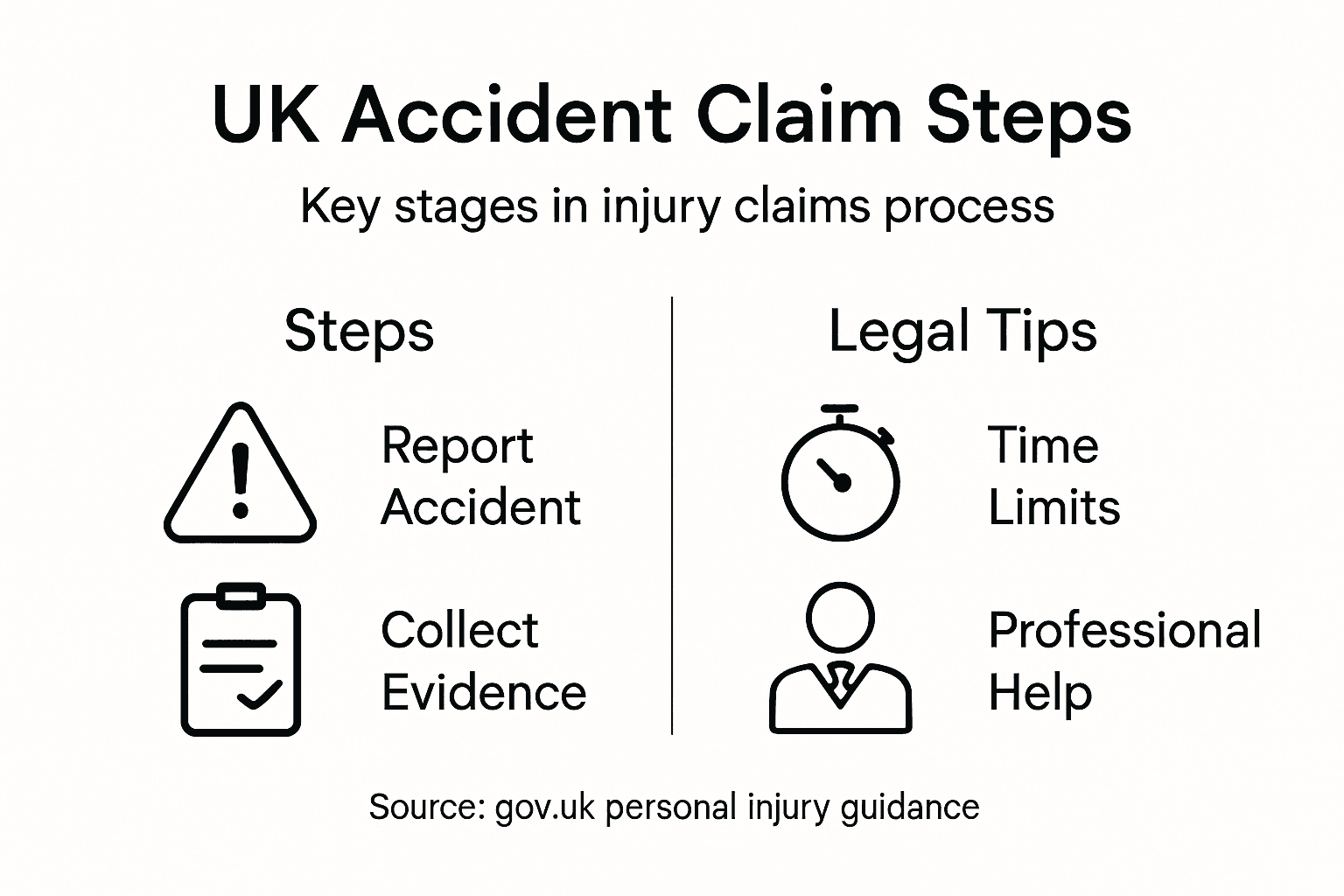
Pro tip: Maintain a comprehensive file of all medical records, accident reports, and correspondence related to your injury to strengthen your potential compensation claim.
Essential Requirements and Time Limits
Personal injury claims in the UK are governed by strict legal requirements and time limits for claims that claimants must carefully navigate. Understanding these essential criteria is crucial for successfully pursuing compensation for injuries sustained through negligence.
Key requirements for making a personal injury claim include:
- Establishing Clear Negligence
- Providing Comprehensive Medical Evidence
- Meeting Statutory Time Limitations
- Demonstrating Direct Causation
- Documenting Financial Losses
The three-year limitation period is perhaps the most critical requirement in personal injury claims. This legal timeframe begins either from the date of the accident or from the date the claimant first became aware of their injury – a concept known as the date of knowledge. Missing this deadline typically results in permanent loss of the right to claim compensation.
Medical documentation plays a pivotal role in substantiating personal injury claims. Claimants must provide comprehensive medical reports that definitively link the injury to the incident, detailing the extent of physical harm, potential long-term impacts, and associated treatment costs. Independent medical assessments are often required to validate the claim’s legitimacy.
The legal system designed these requirements to ensure fair compensation while preventing frivolous or unsubstantiated claims against individuals and organisations.
Recent legal reforms have introduced additional complexity to the claims process. The Official Injury Claim service, particularly for road traffic accidents, now provides a streamlined digital platform for minor injury claims, reducing the need for extensive legal intervention in straightforward cases.
Pro tip: Consult a legal professional immediately after an injury to ensure you preserve critical evidence and understand the specific requirements for your unique claim.
Financial, Emotional, and Legal Impacts
Accident claims encompass a complex interplay of financial and emotional consequences that extend far beyond immediate physical injuries. Understanding these multifaceted impacts is crucial for individuals navigating the challenging aftermath of an accident.
The financial dimensions of accident claims include:
- Direct Medical Expenses
- Lost Wage Compensation
- Rehabilitation Costs
- Future Earning Potential Reduction
- Ongoing Treatment Expenses
Emotional impacts can be profoundly challenging, often manifesting as psychological trauma that extends well beyond physical recovery. Many claimants experience significant stress, anxiety, and potential long-term mental health consequences directly related to their accident and subsequent claims process.
Legal ramifications involve complex considerations of liability, compensation thresholds, and the intricate processes of proving negligence. Each claim requires meticulous documentation and strategic navigation of the legal system, which can be emotionally and financially draining for individuals already dealing with injury-related challenges.
The true impact of an accident claim extends beyond monetary compensation, fundamentally affecting an individual’s quality of life, psychological well-being, and future opportunities.
Insurance and legal frameworks aim to provide comprehensive support, but the reality often involves nuanced challenges. Claimants must carefully document every aspect of their experience, from medical reports to psychological assessments, to build a robust case that accurately represents their total experience.
This table summarises the main financial, emotional, and legal effects of pursuing an accident claim in the UK:
| Impact Area | Typical Effects | Long-Term Consideration |
|---|---|---|
| Financial | Medical bills, lost income | Ongoing treatment, reduced earnings |
| Emotional | Stress, anxiety, trauma | Chronic psychological symptoms |
| Legal | Complex process, strict deadlines | Need for documentation, possible court |
Pro tip: Keep a detailed personal journal documenting physical symptoms, emotional challenges, and financial impacts to provide comprehensive evidence for your claim.
Common Pitfalls and Claim Process Mistakes
Navigating personal injury claims requires meticulous attention to detail, as insurance claim procedures can be complex and unforgiving. Understanding potential pitfalls is crucial to maximising the likelihood of a successful compensation claim.
Common mistakes in the claims process include:
- Providing Incomplete Documentation
- Missing Critical Deadlines
- Accepting Initial Settlement Offers
- Failing to Gather Comprehensive Evidence
- Underestimating Injury Impact
One of the most significant errors claimants make is submitting incomplete or inaccurate information. This can range from missing medical records to insufficient details about the incident, potentially undermining the entire claim. Insurers scrutinise every detail, and even minor discrepancies can lead to claim rejection.
Time limitations represent another critical pitfall. The three-year limitation period is strict, and failing to initiate proceedings within this timeframe can permanently bar individuals from seeking compensation. This includes both the actual incident date and the date of knowledge regarding the injury’s full extent.
Successful claims demand meticulous documentation, strategic timing, and a comprehensive understanding of legal procedures.
Premature settlements are another common mistake. Initial offers from insurance companies often represent minimal compensation and may not account for long-term medical impacts, lost earning potential, or ongoing rehabilitation needs. Claimants should always seek professional legal advice before accepting any settlement.
Pro tip: Maintain a detailed, chronological record of all accident-related expenses, medical treatments, and communications to create a robust evidence trail for your claim.
Take Control of Your Accident Claim Today With Expert Support
Navigating the complex process of claiming after an accident can feel overwhelming especially when faced with strict time limits, gathering vital medical evidence, and understanding legal obligations. If you have suffered a personal injury through no fault of your own in the United Kingdom, do not let uncertainty or common pitfalls delay your claim. Key challenges such as proving negligence and documenting financial and emotional impacts demand professional guidance.

Mayiclaim.co.uk is here to help you every step of the way with no win, no fee legal representation designed to ease financial pressure and provide peace of mind. Don’t risk missing critical deadlines or settling for less than you deserve. Discover how you can turn your accident experience into a powerful claim by visiting Mayiclaim.co.uk now. Learn more about how personal injury claims work legally, the essential requirements and time limits, and how we simplify the claims process for you. Take the first step towards securing your rightful compensation today.
Frequently Asked Questions
Why should I claim after an accident?
Claiming after an accident allows you to seek financial compensation for damages, medical expenses, lost wages, and pain and suffering caused by injuries due to someone else’s negligence. It also helps hold responsible parties accountable and can prevent similar incidents in the future.
What are the key types of accident claims I can make?
The main types of accident claims include road traffic accidents, workplace injury claims, public liability claims, medical negligence claims, and accidents in public spaces. Each type requires specific evidence and documentation to support your claim.
How long do I have to make a personal injury claim?
You generally have three years from the date of the accident or the date you first became aware of the injury (the date of knowledge) to initiate a personal injury claim. Failing to act within this timeframe can lead to losing your right to claim compensation.
What evidence do I need to support my claim?
Key evidence includes medical records, police reports, witness statements, and photographs of the accident. Comprehensive documentation helps establish negligence and substantiates your claim for compensation.
Recent Comments