

After a road traffic accident, confusion and uncertainty often cloud your next steps. Many people across the United Kingdom mistakenly believe that only severe injuries justify compensation or that every claim ends up in court. In reality, the personal injury process offers a range of protections and rights, including widely available no win no fee arrangements for legitimate claims. This guide helps you cut through the myths and understand what British law offers so you can make informed decisions.
Table of Contents
- Personal Injury Explained And Common Myths
- Types Of Personal Injury In The UK
- Key Features Of Road Traffic Claims
- Legal Principles And Claim Requirements
- Claimant Rights And Compensation Factors
- Mistakes To Avoid In Personal Injury Cases
Key Takeaways
| Point | Details |
|---|---|
| Personal Injury Definition | Personal injury encompasses physical or psychological harm caused by another party’s negligence or intentional actions, extending beyond simple accidents. |
| Common Myths | Many misconceptions, such as the belief that claims are always lengthy or that only severe injuries qualify, can deter legitimate claimants from seeking compensation. |
| Legal Principles | Successful claims hinge on establishing negligence, demonstrating causation, and adhering to strict time limits, necessitating clear evidence and professional guidance. |
| Claimant Rights | Claimants are entitled to full compensation, access to legal representation, and transparent communication throughout the claims process to ensure their rights are protected. |
Personal injury explained and common myths
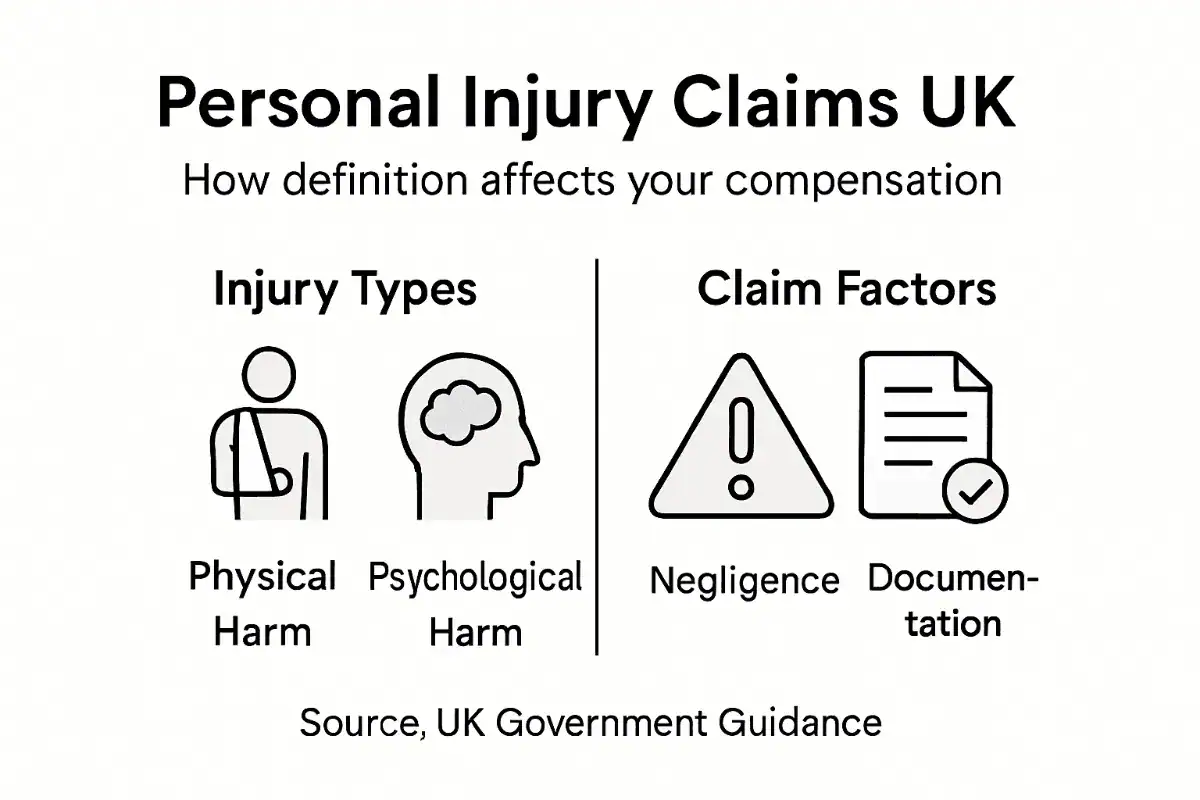
A personal injury is a legal term describing physical or psychological harm caused by another party’s negligence or intentional actions. Unlike popular misconceptions, these claims extend far beyond simple accidents, covering a wide range of scenarios where individuals suffer damage due to someone else’s fault.
The legal landscape of personal injury in the United Kingdom is complex and often misunderstood. Personal injury claims process involves several critical components that many people are unaware of:
- Establishing clear liability for the incident
- Documenting medical evidence and treatment costs
- Calculating potential compensation for physical and psychological damages
- Understanding time limits for making a claim
Common myths surrounding personal injury claims can prevent legitimate victims from seeking rightful compensation. Here are some prevalent misconceptions:
- Myth: Personal injury claims are always lengthy and complicated
- Myth: Only severe injuries qualify for compensation
- Myth: You must go to court to receive compensation
- Myth: Claims are expensive and risky
Recent legislative changes, including the whiplash reforms, have significantly transformed how personal injury claims are processed in the UK. The Civil Liability Act 2018 introduced fixed tariffs for whiplash injuries and increased small claims limits, making the process more streamlined for claimants.
Pro tip: Always collect and preserve evidence immediately after an incident, including photographs, witness statements, and medical records, to strengthen your potential personal injury claim.
Here is a comparison of common myths versus the reality of personal injury claims in the UK:
| Myth | Actual Reality |
|---|---|
| Claims are always lengthy and costly | Many are resolved efficiently without court action |
| Only severe injuries are eligible | Minor injuries can also be compensated under the law |
| Court attendance is always required | Most claims settle outside of court through dialogue |
| Legal costs are unaffordable | No win, no fee arrangements are widely available |
Types of personal injury in the UK
Personal injury claims in the United Kingdom encompass a diverse range of incidents where individuals suffer harm due to another party’s negligence. Personal injury scenarios are legally complex and require careful understanding of specific circumstances and liability.
The primary types of personal injury claims in the UK include:
- Workplace Accidents: Injuries sustained during employment, including machinery accidents, falls, and occupational health hazards
- Road Traffic Accidents: Incidents involving cars, motorcycles, pedestrians, and other vehicles
- Medical Negligence: Harm caused by substandard medical treatment or professional healthcare errors
- Public Liability Claims: Injuries occurring in public spaces due to unsafe conditions
- Occupational Disease Claims: Long-term health conditions resulting from workplace exposure
Each category of personal injury claim has unique legal considerations and specific requirements for proving negligence. Workplace accidents, for instance, require demonstrating that an employer failed to maintain appropriate safety standards, while road traffic claims often involve complex insurance negotiations.
Not all injuries automatically qualify for compensation. The legal system requires clear evidence of another party’s direct responsibility for the harm suffered.
Claims can cover various damages, including:
- Medical treatment costs
- Lost wages and future earning potential
- Rehabilitation expenses
- Psychological trauma
- Long-term care requirements
Pro tip: Consult a legal professional specialising in personal injury within three years of the incident to preserve your right to make a claim and gather crucial supporting evidence.
The following table summarises the major types of personal injury claims in the UK, highlighting common challenges and key legal considerations:
| Type of Injury Claim | Typical Challenge | Essential Legal Consideration |
|---|---|---|
| Workplace Accidents | Proving breach of safety rules | Employer’s duty of care obligations |
| Road Traffic Accidents | Establishing clear liability | Insurance negotiations and evidence |
| Medical Negligence | Complex medical evidence | Professional standard of treatment |
| Public Liability Claims | Witness reliability | Public body’s maintenance standards |
| Occupational Disease Claims | Demonstrating link to work | Long-term causation proof required |
Key features of road traffic claims
Road traffic claims represent a significant category of personal injury compensation in the United Kingdom, covering incidents involving vehicles, pedestrians, and cyclists. Road traffic accident claims require careful navigation of legal and medical assessment processes to secure appropriate compensation.
The essential components of a road traffic claim typically include:
- Establishing Fault: Determining legal responsibility for the accident
- Injury Assessment: Medical evaluation of physical and psychological damages
- Evidence Collection: Gathering police reports, witness statements, and photographic evidence
- Insurance Negotiations: Communicating with relevant insurance companies
- Damage Quantification: Calculating economic and non-economic losses
Key legal considerations for road traffic claims involve proving negligence, which requires demonstrating that another party’s actions directly caused the injury. This process often involves complex investigations and expert testimonies to substantiate the claim.
Successful road traffic claims depend on precise documentation and timely legal action.
Damages that can be claimed in road traffic incidents typically encompass:
- Medical treatment and rehabilitation costs
- Lost earnings and future income reduction
- Vehicle repair or replacement expenses
- Psychological trauma compensation
- Ongoing care and support requirements
Pro tip: Preserve all documentation related to the accident, including medical records, repair estimates, and correspondence, as these will be crucial evidence in supporting your road traffic claim.

Legal principles and claim requirements
Personal injury claims in the United Kingdom are governed by complex legal principles that determine the validity and potential success of compensation requests. Legal principles for personal injury require comprehensive understanding of liability, causation, and precise documentation.
The fundamental legal requirements for making a successful personal injury claim include:
- Establishing Negligence: Proving another party’s direct responsibility for the injury
- Demonstrating Causation: Linking the injury directly to the negligent action
- Providing Medical Evidence: Submitting comprehensive medical reports and assessments
- Adhering to Time Limits: Filing claims within the statutory limitation period
- Quantifying Damages: Calculating economic and non-economic losses accurately
Key legal principles governing personal injury claims centre on the concept of duty of care, which requires individuals and organisations to take reasonable steps to prevent harm. This principle forms the cornerstone of most compensation claims, necessitating clear evidence that a standard of care was breached.
The burden of proof in personal injury claims rests with the claimant, who must provide compelling evidence of negligence and resulting damages.
The claim process typically involves several critical stages:
- Initial legal consultation
- Gathering comprehensive evidence
- Medical assessment and documentation
- Negotiation with responsible parties
- Potential court proceedings if settlement cannot be reached
Pro tip: Maintain a detailed chronological record of all medical treatments, expenses, and communications related to your injury to strengthen your legal claim.
Claimant rights and compensation factors
Claimant rights in personal injury cases represent a critical framework for ensuring fair compensation and legal protection. Claimant compensation rights provide individuals with comprehensive mechanisms to recover damages resulting from injuries caused by another party’s negligence.
The fundamental rights of personal injury claimants encompass several key dimensions:
- Full Compensation Entitlement: Right to claim 100% of damages
- Legal Representation: Access to professional legal advice and support
- Timely Claim Submission: Ability to file claims within statutory limitation periods
- Confidential Assessment: Thorough and private medical evaluations
- Transparent Communication: Comprehensive information about claim progression
Compensation factors are meticulously calculated to address various dimensions of injury impact, including:
- Medical treatment and rehabilitation expenses
- Lost current and future earnings
- Psychological trauma and emotional distress
- Physical pain and suffering
- Potential long-term care requirements
Compensation is not merely about financial recovery, but about restoring the individual’s quality of life to the greatest extent possible.
The legal system recognises that personal injuries extend beyond immediate physical harm, considering nuanced factors such as:
- Severity and permanence of injury
- Impact on professional capabilities
- Psychological consequences
- Required ongoing medical interventions
- Potential lifestyle modifications
Pro tip: Document every expense and keep a comprehensive medical journal to substantiate the full extent of your injury’s impact during the claims process.
Mistakes to avoid in personal injury cases
Navigating personal injury claims requires careful attention to detail and strategic decision-making. Common personal injury claim mistakes can significantly undermine the potential success of a compensation claim.
The most critical mistakes claimants frequently make include:
- Delaying Legal Action: Waiting too long to initiate a claim
- Insufficient Evidence Collection: Failing to gather comprehensive documentation
- Premature Settlement: Accepting initial compensation offers without full assessment
- Inadequate Medical Documentation: Not maintaining detailed medical records
- Providing Inconsistent Statements: Making conflicting accounts of the incident
Understanding the nuanced legal landscape is crucial. Many claimants unknowingly compromise their cases by:
- Missing strict statutory limitation periods
- Discussing case details on social media
- Undervaluing long-term injury consequences
- Neglecting psychological impact documentation
- Proceeding without professional legal guidance
Every statement and action can potentially impact the outcome of your personal injury claim.
The legal system is increasingly complex, with recent reforms like the Official Injury Claim portal adding layers of procedural complexity. Claimants must be meticulous in understanding these evolving regulations to protect their rights and maximise potential compensation.
Pro tip: Consult a specialised personal injury solicitor immediately after an incident, preserving all evidence and avoiding direct communication with insurance companies that might compromise your claim.
Understand Your Personal Injury Rights with Mayiclaim
Navigating the complex legal principles and requirements of personal injury claims in the United Kingdom can feel overwhelming, especially when trying to prove negligence and secure rightful compensation. With common challenges such as establishing fault, documenting medical evidence, and avoiding costly mistakes, many injured individuals miss out on the full support they deserve. At Mayiclaim, we specialise in guiding claimants through these difficulties on a no-win-no-fee basis, ensuring you receive professional representation without added financial risk.

Take control of your personal injury claim today. Visit our site to learn how we help thousands of people across the UK to effectively manage their claims and get the compensation they are entitled to. Do not delay because strict time limits apply. Explore our services now at Mayiclaim and start your claim with confidence. For detailed insights into road traffic claims and the personal injury claims process, see Road Traffic Accident Claims and Personal Injury Claims Support for tailored assistance.
Frequently Asked Questions
What is the definition of personal injury?
A personal injury is a legal term that describes physical or psychological harm caused by another party’s negligence or intentional actions. It encompasses a wide range of incidents beyond simple accidents.
What are common myths about personal injury claims?
Common myths include the belief that claims are always lengthy and complicated, only severe injuries qualify, court attendance is mandatory, and claims are expensive and risky. These misconceptions can deter legitimate claimants from seeking compensation.
What types of incidents can lead to a personal injury claim?
Personal injury claims can arise from various incidents, including workplace accidents, road traffic accidents, medical negligence, public liability claims, and occupational diseases, each with its unique legal considerations.
What are the key components of a road traffic claim?
Key components of a road traffic claim include establishing fault, assessing injuries, collecting evidence, negotiating with insurance companies, and quantifying damages to secure appropriate compensation.
Recommended
- Role of Solicitors in Injury Claims: Why Expertise Matters
- Role of Solicitors in Injury Claims: Why Expertise Matters
- Road Traffic Accident Compensation Claims – No Win No Fee
- Personal Injury Claims Solicitors – No Win No Fee – Mayiclaim
- What is Personal Injury Marketing? Understanding Its Impact – LawSmiths
Recent Comments