

After a UK road traffic accident, the thought of expensive legal fees can stop you from claiming compensation you deserve. No win no fee agreements remove this barrier, letting you pursue justice without upfront costs. This guide walks you through the entire claim process, from eligibility to payout, helping you avoid common pitfalls and maximize your recovery.
Table of Contents
- Understanding No Win No Fee Claims
- Prerequisites: What You Need Before Starting Your Claim
- Step-by-Step Claim Process Under No Win No Fee
- Common Mistakes and How to Avoid Them
- Expected Timelines, Outcomes, and Fee Structures
- Alternative Funding Options and Their Tradeoffs
- Summary and Next Steps to Start Your Claim
- Get Expert No Win No Fee Legal Help Today
- Frequently Asked Questions
Key Takeaways
| Point | Details |
|---|---|
| No upfront legal costs | Pay fees only if your claim succeeds, removing financial risk. |
| 3-year filing deadline | Claims must be filed within three years of the accident date. |
| Success fee capped at 25% | Legal fees deducted from compensation cannot exceed 25% by law. |
| Evidence is critical | Medical records, police reports, and witness statements strengthen claims. |
| Average resolution time | Most claims settle within 3 to 12 months depending on complexity. |
Understanding No Win No Fee Claims
A no win no fee agreement, formally called a Conditional Fee Agreement (CFA), is a legal funding arrangement under UK law. You sign a contract with solicitors who represent you without requiring any money upfront. No win no fee agreements mean you pay nothing if the claim fails, making legal help accessible to injured victims who might otherwise avoid claims due to financial worries.
If your claim succeeds, the solicitor deducts a success fee from your compensation. UK legislation caps this fee at 25% of the damages awarded, ensuring you retain most of your settlement. If you lose, you pay no solicitor fees, though you might face other minor costs like insurance premiums.
This funding model democratizes access to justice. Whether you’re claiming for a car accident, pedestrian collision, or motorcycle incident, no win no fee claims explained show how these arrangements level the playing field against insurers with large legal teams.
A common misconception is that all claim expenses disappear if you lose. While solicitor fees are waived, some costs like after-the-event insurance or medical report fees might still apply. However, these are typically minimal and often covered by insurance policies arranged by your solicitor. Understanding the importance of road accident claims helps you appreciate how this system balances risk and accessibility.
Pro Tip: Always request a detailed breakdown of the success fee and any additional costs before signing a CFA. Transparency from the outset prevents surprises later.
The benefits extend beyond cost elimination:
- Access to experienced solicitors who handle complex negotiations
- Motivation for solicitors to win, as their payment depends on success
- Protection from opponent’s legal costs through insurance policies
- Clear regulations under 2026 no win no fee regulations safeguarding claimants
Prerequisites: What You Need Before Starting Your Claim
Before contacting a solicitor, verify you meet the basic eligibility criteria. The most critical requirement is the three-year limitation period. UK law requires you to file personal injury claims within three years of the accident date, or from when you discovered the injury. Missing this deadline means your claim becomes legally invalid, regardless of merit.
You must gather essential evidence to demonstrate liability and injury severity. Start with medical records documenting your injuries, treatments, and prognosis. Police reports provide official accounts of the accident circumstances and fault determinations. Witness statements add independent verification of events. Photographic evidence of the accident scene, vehicle damage, and visible injuries strengthens your case significantly.

During the initial consultation, solicitors assess claim viability. They review your evidence, evaluate liability, and estimate potential compensation. This free assessment determines whether they will take your case on a no win no fee basis. Understanding claim prerequisites ensures you arrive prepared.
Generally, you must not be primarily at fault for the accident. If investigations reveal you bear most or all responsibility, your claim will likely fail. Contributory negligence, where you share partial fault, might reduce your compensation but doesn’t automatically disqualify you.
Pro Tip: Start documenting everything immediately after the accident. Request copies of police reports, take photographs, and collect contact details from witnesses while memories are fresh.
Essential documents to collect include:
- Medical records from initial treatment through ongoing care
- Police accident reports with reference numbers
- Witness contact information and written statements
- Photographs of injuries, vehicles, and accident location
- Employment records showing lost wages if applicable
- Insurance policy details for all parties involved
Understanding accident claims process UK requirements helps you gather the right documentation from the start, avoiding delays later.
Step-by-Step Claim Process Under No Win No Fee
Once you’ve gathered your evidence and confirmed eligibility, follow these structured steps to pursue compensation:
- Initial free case assessment: Contact a no win no fee solicitor who reviews your evidence and evaluates claim strength. During this consultation, they explain the CFA terms, success fee percentage, and any additional costs. If they accept your case, you sign the agreement.
- Evidence gathering phase: Your solicitor requests comprehensive medical reports, obtains police documentation, and interviews witnesses. They may commission independent accident reconstruction experts for complex cases. This phase builds the foundation of your claim.
- Claim submission: The solicitor sends a formal Letter of Claim to the defendant’s insurer, outlining liability arguments and compensation demands. The insurer has three months to investigate and respond under Pre-Action Protocol rules.
- Negotiation and settlement: Most claims settle through negotiation rather than court. Your solicitor exchanges offers and counteroffers with the insurer, aiming for fair compensation. This stage can involve multiple rounds of discussions.
- Compensation payment: Once both parties agree on a settlement figure, you receive your compensation minus the success fee and any deductible costs. Payment typically arrives within 14 to 28 days of settlement.
The step-by-step claim process varies slightly depending on accident type. Whether pursuing road traffic accident claims process or pedestrian accident claims, the fundamental stages remain consistent.
| Stage | Typical Duration | Key Activities |
|---|---|---|
| Assessment | 1-2 weeks | Evidence review, CFA signing |
| Evidence gathering | 4-12 weeks | Medical reports, witness statements |
| Claim submission | 1 week | Letter of Claim preparation and sending |
| Insurer response | Up to 3 months | Investigation, liability decision |
| Negotiation | 2-6 months | Settlement discussions, offer exchanges |
| Payment | 2-4 weeks | Final agreement, compensation transfer |
Common Mistakes and How to Avoid Them
Even with professional representation, claimants make errors that jeopardize their claims. Awareness of these pitfalls helps you navigate the process smoothly.
The most devastating mistake is missing the three-year limitation period. Common mistakes include missing the 3-year claim deadline, inadequate evidence gathering, and failing to inform solicitors of pre-existing conditions. Courts show no flexibility on this deadline. If you file even one day late, your claim dies regardless of its strength. Set reminders and consult solicitors well before the deadline approaches.
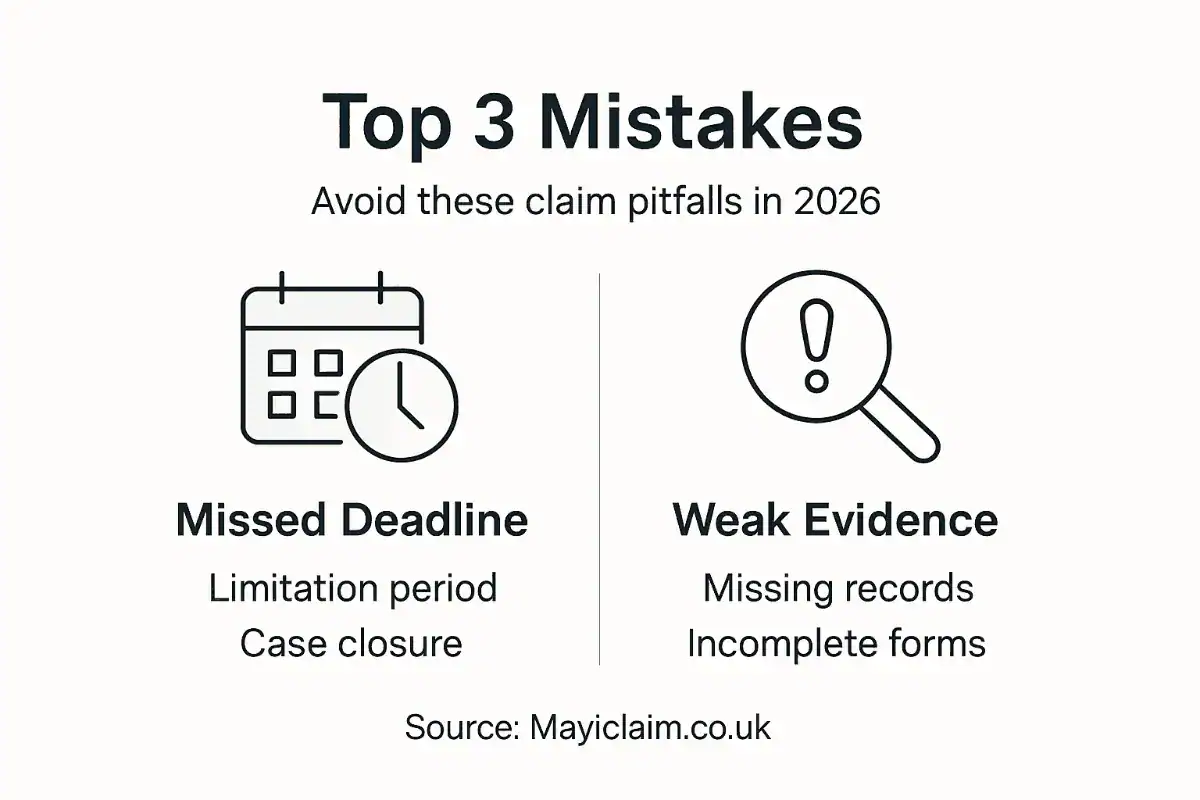
Weak or incomplete evidence undermines even valid claims. Many claimants fail to obtain medical documentation promptly, allowing injuries to heal without official records. Others neglect to photograph accident scenes or collect witness details before dispersing. Insurers exploit these gaps to dispute liability or minimize compensation.
Not disclosing pre-existing medical conditions represents another critical error. You might worry this information will harm your claim, but the opposite is true. Solicitors need complete medical histories to distinguish accident-related injuries from existing conditions. Failure to disclose can appear as fraud, destroying your credibility and claim.
“Transparency with your solicitor about medical history, accident circumstances, and any uncertainties strengthens your case. Honesty builds trust and allows for realistic claim assessments.”
Additional mistakes include:
- Accepting initial low settlement offers without solicitor review
- Posting about accidents or injuries on social media, providing ammunition for insurers
- Failing to attend medical appointments, suggesting injuries aren’t serious
- Not reporting accidents to police, eliminating official documentation
- Delaying solicitor consultation, allowing evidence to disappear
Pro Tip: Consult solicitors within weeks of your accident to verify deadlines and evidence needs. Early engagement prevents most common mistakes and positions your claim for success. Understanding common no win no fee mistakes through resources like the Martin Taggart expert guide prepares you for potential challenges.
Expected Timelines, Outcomes, and Fee Structures
Setting realistic expectations about claim duration, compensation amounts, and costs helps you plan effectively. Most straightforward road traffic claims resolve within 3 to 12 months. Complex cases involving severe injuries, disputed liability, or multiple parties can extend to 18 months or longer.
Timeline factors include:
- Injury severity and recovery duration
- Liability clarity and evidence strength
- Insurer cooperation and negotiation willingness
- Medical report availability
The success fee is capped at 25% of your compensation by UK law. This percentage applies only to general damages (pain and suffering), not special damages (financial losses like medical expenses or lost wages). Your solicitor deducts the fee from your settlement before you receive payment.
Compensation typically covers several categories:
- General damages for pain, suffering, and loss of amenity
- Special damages for medical expenses, both past and future
- Lost income and reduced earning capacity
- Care costs if you require assistance
- Travel expenses related to medical treatment
After-the-event insurance protects you if your claim fails. This policy covers the opponent’s legal costs, preventing financial devastation from losing. Your solicitor typically arranges this insurance, with premiums either paid upfront or deducted from successful settlements. The 2026 no win no fee fee structure ensures transparency in all cost components.
| Compensation Component | Coverage | Fee Application |
|---|---|---|
| General damages | Pain and suffering | 25% success fee applies |
| Medical expenses | Treatment costs | No success fee deduction |
| Lost wages | Income during recovery | No success fee deduction |
| Future losses | Ongoing impact | No success fee deduction |
Alternative Funding Options and Their Tradeoffs
While no win no fee dominates UK personal injury claims, other funding methods exist with distinct advantages and limitations.
Legal aid once provided free legal representation for low-income individuals. However, severe eligibility restrictions now exclude most road traffic accident claims. You must demonstrate extreme financial hardship and your case must fall within very limited categories. The bureaucratic application process adds delays even if you qualify. Alternative funding options such as legal aid or private funding have different tradeoffs including upfront costs or eligibility restrictions compared to no win no fee agreements.
Private funding means paying solicitor fees directly, either hourly or through fixed-fee arrangements. You bear full financial risk regardless of outcome. If you lose, you still pay your solicitor and potentially the opponent’s costs. This option suits wealthy individuals who want full control and no deductions from compensation, but it’s impractical for most claimants.
Trade union legal services offer representation to members, sometimes on similar terms to no win no fee. Coverage and quality vary significantly between unions. Some provide excellent support; others have limited resources or outsource to external firms.
Legal expenses insurance, included with some home or motor insurance policies, might cover claim costs. Check your policies carefully, as coverage often has exclusions or limits. This option involves no out-of-pocket costs but may restrict solicitor choice.
| Funding Type | Upfront Cost | Risk Level | Availability |
|---|---|---|---|
| No win no fee | None | Low (pay only if win) | Widely accessible |
| Legal aid | None | Low | Very restricted |
| Private funding | High | Very high (pay regardless) | Universal |
| Union legal services | None (if member) | Low to medium | Members only |
| Legal expenses insurance | None | Low | Policy-dependent |
Understanding funding options for claims through resources like Lawyer Magazine funding comparison helps you make informed decisions. For most road traffic accident victims, no win no fee balances accessibility, risk management, and cost effectiveness better than alternatives.
Summary and Next Steps to Start Your Claim
You now have comprehensive knowledge to pursue a no win no fee road traffic accident claim confidently. Before moving forward, complete this checklist:
- Verify your accident occurred within the last three years
- Gather all medical records, police reports, and witness statements
- Photograph injuries, vehicles, and accident scenes if not already done
- Document financial losses including medical expenses and lost wages
- Avoid discussing your claim on social media or with insurers directly
Selecting the right solicitor makes a substantial difference in outcome. Look for firms specializing in road traffic claims with proven no win no fee track records. Select no win no fee solicitors who offer free initial consultations, allowing you to assess expertise and rapport before committing.
During consultations, ask specific questions:
- What percentage success fee do you charge?
- How do you handle after-the-event insurance?
- What is your success rate with similar claims?
- How will you communicate progress throughout the process?
Read CFA terms carefully before signing. Ensure you understand the success fee calculation, any additional costs, and circumstances where you might owe money despite losing. Reputable solicitors explain everything clearly and answer questions patiently.
Pro Tip: Keep all accident-related documents organized in one folder, both physical and digital copies. Efficient document management speeds up the claims process and prevents crucial evidence from being misplaced. Following this start your claim guide positions you for the best possible outcome.
Get Expert No Win No Fee Legal Help Today
Navigating road traffic accident claims requires expertise and persistence. Mayiclaim.co.uk connects you with experienced no win no fee solicitors who specialize in UK personal injury law. Our network of qualified legal professionals understands the complexities of road traffic accident claims and fights to maximize your compensation.

You pay nothing upfront and nothing if your claim fails. Success fees are transparent and capped by law, ensuring you keep the majority of your settlement. From initial consultation through final payment, our solicitors guide you through every stage, handling negotiations with insurers and building strong evidence-based claims. Take the first step toward the compensation you deserve by visiting Mayiclaim.co.uk today for your free case assessment.
Frequently Asked Questions
What is a no win no fee claim?
A no win no fee claim, legally termed a Conditional Fee Agreement, means you pay no solicitor fees unless your claim succeeds. If you win, the solicitor deducts a success fee capped at 25% of your compensation. This arrangement eliminates upfront costs and financial risk, making legal representation accessible to injured accident victims regardless of financial circumstances.
How do I know if I am eligible for a no win no fee claim?
You must have suffered injury in a UK road traffic accident within the last three years. You typically should not be mainly at fault and must have credible evidence supporting your claim, including medical records and accident documentation. Solicitors assess eligibility during free initial consultations.
What are the risks of no win no fee claims?
You pay no solicitor fees if you lose, but may be responsible for other costs like after-the-event insurance premiums. Success fees are capped by law and deducted only from compensation awarded. Most risks are minimal compared to private funding where you pay regardless of outcome.
How long does a no win no fee claim usually take?
Most claims resolve within 3 to 12 months, depending on case complexity, injury severity, and insurer cooperation. Early preparation with strong evidence can shorten processing times. Complex cases involving disputed liability or severe injuries may extend beyond 12 months.
Can I use alternative funding instead of no win no fee?
Legal aid eligibility is limited; private funding requires upfront fees compared to no win no fee agreements. Legal aid has strict eligibility rules and is rarely available for road traffic claims. Private funding involves substantial upfront payments and places full financial risk on you if the claim fails, making no win no fee the most practical choice for most claimants. Check alternative funding options to understand the full range of possibilities.
Recent Comments