

Every year, 3 million people in the UK suffer injuries from accidents, yet only 20% pursue compensation claims. Many believe they cannot afford legal help or that the claims process is too complex. This guide cuts through the confusion, explaining accident compensation clearly and showing how no win no fee agreements make legal support accessible to everyone, regardless of financial situation.
Table of Contents
- Understanding Accident Compensation in the UK
- How No Win No Fee Agreements Work
- Types of Accidents Covered and Eligibility Criteria
- How Compensation Amounts Are Calculated
- Key Evidence Needed for Successful Claims
- Common Misconceptions and Eligibility Myths
- Typical Timelines and What to Expect
- Taking Action: How to Start Your Claim with No Upfront Costs
- Get Expert No Win No Fee Legal Help Today
- Frequently Asked Questions
Key Takeaways
| Point | Details |
|---|---|
| Accident compensation supports injured individuals financially | No upfront legal fees required through no win no fee agreements |
| Claims cover road traffic, workplace, and public liability accidents | Eligibility depends on proving another party’s negligence caused your injury |
| Compensation amounts reflect injury severity and financial losses | Medical evidence and witness statements strengthen your claim significantly |
| Most claims resolve within 6 to 12 months | Strong documentation accelerates the settlement process |
Understanding Accident Compensation in the UK
Accident compensation provides financial support to individuals injured through another party’s negligence. It covers medical expenses, lost earnings, pain and suffering, and the broader impact on your quality of life.
The purpose is straightforward: hold negligent parties accountable while helping victims recover without bearing the financial burden. Despite 3 million annual injuries, only 600,000 people claim compensation. This gap exists partly because many do not understand their rights or assume they cannot afford legal representation.
Common accident types include:
- Road traffic collisions involving cars, motorcycles, cyclists, or pedestrians
- Workplace accidents from unsafe conditions or inadequate safety measures
- Public liability incidents on poorly maintained premises or pavements
- Medical negligence causing avoidable harm during treatment
UK law, including the Occupiers’ Liability Act 1974, establishes clear duties of care. When someone breaches these duties and causes you harm, you have the legal right to seek compensation. Understanding personal injury claims definition helps clarify what qualifies as a valid claim and sets realistic expectations for your case.
How No Win No Fee Agreements Work
No win no fee arrangements, formally called Conditional Fee Agreements, transform access to justice by removing financial barriers. You pay nothing upfront, and your solicitor only receives payment if your claim succeeds.
Here’s how it protects you:
- Zero initial costs mean anyone can pursue legitimate claims regardless of income
- Solicitors assume the financial risk, so they only take cases with strong merit
- Success fees are typically capped at 25% of your compensation, agreed transparently before you sign
- If your claim fails, you owe nothing to your solicitor for their work
This structure encourages thorough case preparation. Solicitors invest time and resources because their payment depends on winning. No win no fee solicitors handle all legal complexities, from gathering evidence to negotiating with insurers, while you focus on recovery.
The no win no fee road accident claims process has proven particularly effective, with higher success rates than traditional fee arrangements. Before signing any agreement, confirm the exact success fee percentage and any additional costs. Reputable solicitors provide complete transparency about no win no fee legal protection and fee structures.
Pro tip: Request a written breakdown of all potential costs and the maximum amount you might pay from your compensation. This protects you from unexpected deductions and ensures you understand exactly what you will receive if your claim succeeds.
Types of Accidents Covered and Eligibility Criteria
Not every accident qualifies for compensation. Your claim must meet specific legal criteria, primarily proving that another party’s negligence caused your injury.
Eligible accident types include:
- Road traffic collisions where another driver, cyclist, or pedestrian acted negligently
- Workplace injuries from unsafe equipment, inadequate training, or poor safety protocols
- Slips, trips, and falls on poorly maintained public or private property
- Assaults in locations where security was negligently inadequate
- Medical mistakes during diagnosis, treatment, or aftercare
Both physical injuries and psychological trauma qualify if properly documented. Conditions like PTSD, anxiety, or depression following an accident are compensable when medical professionals diagnose and link them to the incident.
To establish eligibility, you must prove:
- The defendant owed you a duty of care
- They breached that duty through action or inaction
- Their breach directly caused your injuries
- You suffered quantifiable losses or harm
Intentional self harm, injuries from your own negligence, or accidents where no one else bears fault do not qualify. The public liability claim eligibility framework requires clear evidence linking the defendant’s negligence to your harm. Review examples of accident compensation claims to better understand whether your situation meets these standards.
How Compensation Amounts Are Calculated
Compensation reflects the full impact of your injury, both immediate and long term. UK courts use established guidelines to ensure consistency and fairness across similar cases.
The calculation considers five main factors:
- Injury severity and permanent effects on your physical capabilities
- Lost earnings, including future income if you cannot return to work
- Medical expenses for treatment, rehabilitation, and ongoing care needs
- Pain, suffering, and reduced quality of life
- Psychological impact and emotional distress
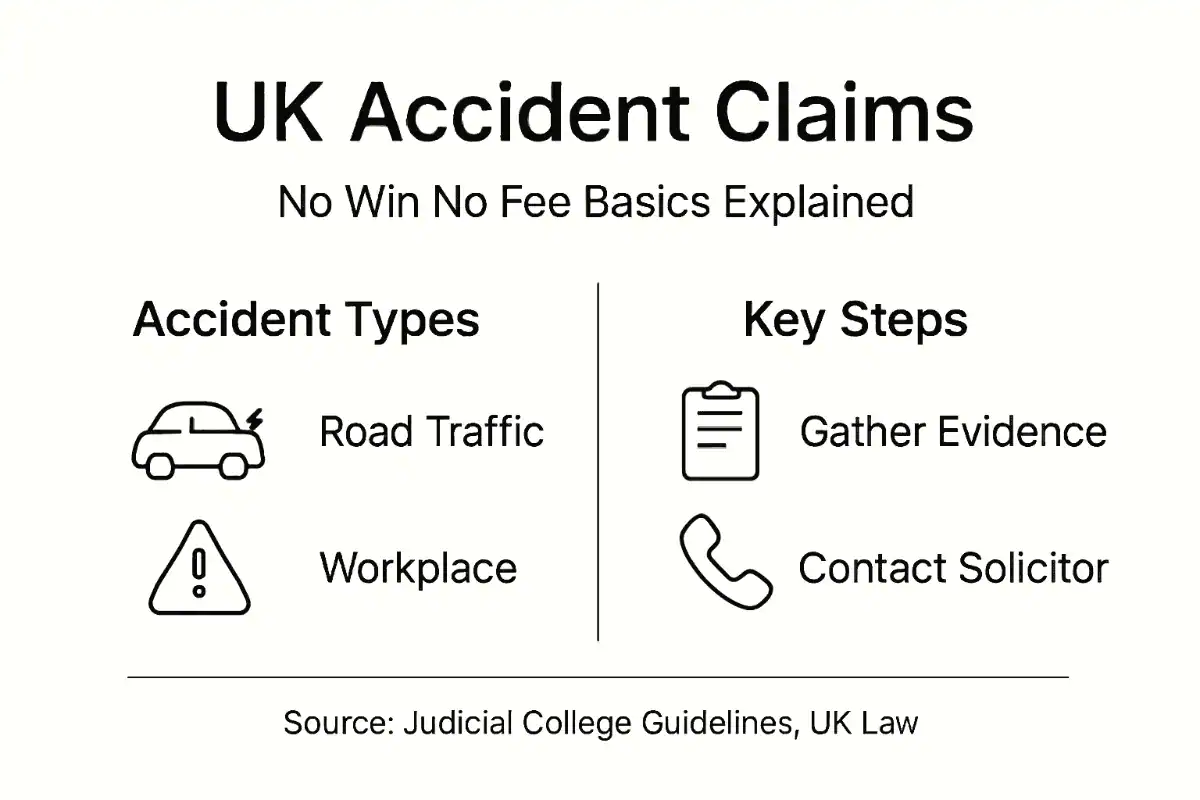
The Judicial College Guidelines provide standard compensation ranges for different injury types. A minor whiplash injury might warrant £2,000 to £4,000, while severe spinal injuries causing paralysis can exceed £300,000. These figures represent general damages for the injury itself.

Special damages cover your financial losses: medical bills, prescription costs, travel to appointments, lost wages, and necessary home modifications. Keep receipts and records for everything, as these directly increase your compensation amount.
Future losses also count. If your injury prevents you from working or requires ongoing care, actuaries calculate the present value of these lifetime costs. Calculating personal injury compensation involves detailed assessment of both current and projected impacts on your life.
Pro tip: Maintain a daily journal documenting pain levels, activities you can no longer perform, and emotional struggles. This contemporaneous record provides powerful evidence of suffering that might otherwise be difficult to quantify months later.
Key Evidence Needed for Successful Claims
Strong evidence separates successful claims from rejected ones. Insurers scrutinize every detail, so comprehensive documentation is essential from the moment an accident occurs.
Critical evidence includes:
- Medical records confirming injury diagnosis, treatment received, and prognosis
- Photographs of injuries, accident scenes, and hazardous conditions
- Witness statements from people who saw the accident happen
- Police or incident reports documenting official findings
- Expert assessments from medical professionals or accident reconstruction specialists
Medical evidence carries particular weight. Your GP records, hospital admission notes, specialist reports, and rehabilitation assessments collectively prove the extent and impact of your injuries. Gaps in medical treatment can weaken claims, as insurers argue injuries were not serious if you did not seek consistent care.
Witness testimony corroborates your account and establishes fault. Independent witnesses hold more credibility than friends or family, though all statements help. Collect contact details immediately, as memories fade and witnesses become harder to locate over time.
Proving negligence requires showing what the defendant did wrong. For key evidence for road traffic claims, this might include dashcam footage, traffic camera recordings, or vehicle damage analysis. In fatal accident claim evidence, detailed investigations and expert reports become even more critical.
Start gathering evidence immediately. Accident scenes change, witnesses move away, and memories become less reliable. The sooner you document everything, the stronger your claim foundation.
Common Misconceptions and Eligibility Myths
Misunderstandings about accident claims prevent thousands of eligible people from seeking compensation they deserve. Let’s address the most common myths directly.
You do not need money upfront for legal representation. No win no fee agreements mean solicitors work without payment unless they win your case. This eliminates the financial barrier that stops many people from pursuing valid claims.
“Many injured individuals mistakenly believe they must pay solicitors upfront, when in reality no win no fee arrangements provide risk free access to expert legal representation.”
You do not have to file immediately, but you cannot wait forever. The UK law sets a three year limitation period from the accident date or from when you realized the injury was caused by negligence. Missing this deadline usually means losing your right to claim permanently.
Psychological injuries absolutely qualify for compensation. PTSD, anxiety disorders, and depression caused by accidents are legitimate claims when properly diagnosed and documented by mental health professionals. These conditions often accompany physical injuries but can also stand alone.
Common myths debunked:
- Minor injuries are not worth claiming: Even relatively small injuries deserve compensation if they caused pain, medical expenses, or time off work
- You can claim for any accident: Only accidents caused by another’s negligence qualify; your own carelessness does not entitle you to compensation
- Claims always go to court: Most settle through negotiation without ever reaching a courtroom
- Making a claim damages relationships: You claim against insurance policies, not individuals personally
Understanding these realities helps you make informed decisions about pursuing legitimate compensation rather than accepting unnecessary losses.
Typical Timelines and What to Expect
Claim duration varies based on complexity, evidence quality, and defendant cooperation. Understanding the process helps you plan and reduces anxiety about what comes next.
The typical claim follows five stages:
- Initial assessment where solicitors evaluate your case and gather preliminary evidence
- Formal claim submission to the defendant or their insurer with detailed particulars
- Liability determination as the defendant admits fault, disputes it, or makes a partial admission
- Negotiation phase where solicitors and insurers discuss appropriate compensation amounts
- Settlement or court proceedings resulting in either agreed payment or judicial determination
Straightforward claims with clear liability and well documented injuries often settle within six to nine months. Complex cases involving disputed fault, severe injuries requiring ongoing treatment, or multiple parties can extend beyond 18 months.
Typical claim timelines show that most no win no fee claims resolve between 6 and 12 months. Several factors influence duration: the defendant’s willingness to negotiate, medical treatment completion, evidence availability, and whether court proceedings become necessary.
Some insurers deliberately delay hoping you will accept lower settlements out of frustration. Experienced solicitors recognize these tactics and maintain pressure to reach fair resolutions promptly.
You remain informed throughout. Your solicitor should provide regular updates, explain developments in plain language, and seek your approval before accepting any settlement offer. The final decision about accepting compensation always rests with you.
Taking Action: How to Start Your Claim with No Upfront Costs
Starting your claim is simpler than you might expect. Follow these practical steps to begin your journey toward fair compensation.
- Assess whether your accident meets basic eligibility criteria: another party’s negligence caused you injury within the past three years.
- Contact reputable no win no fee solicitors for a free initial consultation where they evaluate your case merit and explain the process.
- Review and confirm the fee agreement in writing, ensuring you understand the success fee percentage and any potential deductions from your compensation.
- Begin gathering all relevant evidence: medical records, photographs, witness details, and documentation of financial losses.
- Authorize your solicitor to proceed with formal claim submission, including all supporting documentation and legal arguments.
- Cooperate fully with medical examinations, provide requested information promptly, and maintain regular communication with your legal team.
Start this process as early as possible. Evidence becomes harder to obtain over time, witnesses forget details, and the three year limitation period approaches faster than expected.
Finding no win no fee solicitors with proven track records in your specific accident type increases success likelihood. Look for firms offering free consultations, transparent fee structures, and specialists experienced in cases similar to yours.
Pro tip: Keep a detailed file of all correspondence, medical appointments, expenses, and conversations related to your claim. This organizational habit prevents information loss and ensures you can quickly provide anything your solicitor needs, speeding up the entire process.
Get Expert No Win No Fee Legal Help Today
You deserve fair compensation for injuries caused by someone else’s negligence. Mayiclaim connects you with experienced personal injury claims solicitors who work on a no win no fee basis, eliminating financial risk while maximizing your compensation potential.

Our specialists handle all claim types, from road traffic accident claims to work accident compensation cases. We gather evidence, negotiate with insurers, and fight for every pound you deserve. Start your claim today with a free consultation and discover how accessible expert legal support really is.
Frequently Asked Questions
What is accident compensation?
Accident compensation is financial payment to individuals injured due to another party’s negligence. It covers medical costs, lost earnings, pain and suffering, and life impact. UK law provides this legal right to help victims recover without bearing the financial burden of someone else’s mistake.
How does no win no fee legal representation protect me?
You pay absolutely nothing unless your claim succeeds. Solicitors assume all financial risk, working without payment until they secure your compensation. If your claim fails, you owe nothing for their services, eliminating the fear of mounting legal bills.
What types of accidents qualify for compensation claims?
Road traffic collisions, workplace accidents, and public liability incidents are the most common qualifying types. Medical negligence and assault in locations with inadequate security also qualify. Every case requires proving another party’s negligence directly caused your injury.
How long does the compensation claim process take?
Most claims resolve within 6 to 12 months depending on complexity and evidence quality. Straightforward cases with admitted liability settle faster, while disputed claims or severe injuries requiring ongoing treatment may take 18 months or longer. Your solicitor provides timeline estimates based on your specific circumstances.
What evidence do I need to support my personal injury claim?
Medical reports documenting your injuries, witness statements describing the accident, and proof establishing the defendant’s negligence form the foundation. Photographs, police reports, and records of financial losses strengthen your case significantly. Early evidence collection improves claim success and compensation amounts.
Recent Comments