

Every worker hopes never to face a serious injury on the job, yet for many in demanding industries across the United Kingdom, accidents can have life-changing consequences. When your pay stops after an accident, the pressure to support your family and pay bills becomes immediate. Understanding your rights to a workplace accident claim does more than protect your health—it helps you stand up for lost wages and secure the financial support you need whilst recovering. Find out what truly defines a valid claim and why your employer’s responsibilities matter most.
Table of Contents
- Defining Workplace Accident Claims In The UK
- Types Of Workplace Injuries Covered
- The Claims Process And Legal Requirements
- Employee Rights And Employer Responsibilities
- Risks, Pitfalls, And Financial Implications
Key Takeaways
| Point | Details |
|---|---|
| Workplace Accident Claims | Employees have the right to claim compensation for injuries or illnesses suffered due to employer negligence. |
| Documentation is Crucial | Gather evidence immediately after an incident, including medical records and eyewitness statements, to support your claim. |
| Understanding Legal Timelines | Claims must typically be filed within three years of the accident; failing to do so may result in forfeiting your right to compensation. |
| Employer Responsibilities | Employers must ensure safe working conditions and cannot retaliate against employees who report injuries or pursue claims. |
Defining Workplace Accident Claims in the UK
A workplace accident claim is a legal request for compensation when you’re injured or become ill at work through no fault of your own. This claim allows you to seek damages for pain, suffering, lost wages, and medical costs. Understanding what qualifies as a workplace accident claim is the first step towards protecting your rights.
Under UK civil law, if you suffer an injury or illness caused by your employer’s negligence, you have the right to pursue compensation. Your employer is generally required to maintain employers’ liability insurance to cover such claims. This legal framework exists to protect workers like you from bearing the financial burden of workplace injuries.
Workplace accidents can happen in various ways:
- Slips, trips, or falls due to unsafe flooring or poor maintenance
- Equipment failures or lack of proper safety equipment
- Exposure to hazardous substances without adequate protection
- Manual handling injuries from lifting heavy loads incorrectly
- Vehicle accidents whilst performing work duties
- Violence or assault from other workers or the public
What makes a claim valid is that your employer failed to meet their legal duty of care. This means they didn’t provide adequate safety measures, training, or working conditions. Your role is to demonstrate this negligence caused your injury.
A workplace accident claim recognises your right to compensation when your employer’s actions or inaction directly led to your injury or illness.
Important documentation forms the backbone of any claim. Reporting your accident to your employer immediately and requesting a copy of the accident book entry is essential. This record proves the incident occurred and when it happened.
You’ll need to gather specific evidence to support your claim:
- Medical records showing your diagnosis and treatment
- Eyewitness statements from colleagues who saw the accident
- Photographs of the hazard or accident location
- Your employment contract and payslips showing lost earnings
- Correspondence with your employer about the incident
- Any safety violation reports or complaints you’d previously made
Timing matters significantly. Most claims must be brought within three years of the accident date in England, Wales, or Northern Ireland. In Scotland, you typically have three years as well, though some circumstances extend this. Missing this deadline means you lose your legal right to claim.
Pro tip: Start gathering evidence immediately after your accident—memories fade and witnesses move on, so collect statements and take photographs whilst details are fresh and locations unchanged.
Types of Workplace Injuries Covered
Not every injury at work qualifies for compensation, but the UK system covers a remarkably broad range of harm. Understanding what’s included helps you recognise whether your injury entitles you to claim. The framework protects workers injured through employer negligence, whether the damage is obvious or develops over time.

The UK work injury compensation system recognises both physical and psychological injuries caused by work. This dual approach means your claim isn’t limited to visible wounds or broken bones. Mental health conditions arising from workplace incidents receive the same legal protection as physical trauma.
Physical injuries that qualify for compensation include:
- Slips, trips, and falls on workplace premises
- Manual handling injuries from lifting or moving heavy objects
- Burns, scalds, or chemical exposure injuries
- Crush injuries from machinery or equipment
- Electrocution or electrical injuries
- Repetitive strain injuries from prolonged tasks
- Occupational diseases like asbestos-related conditions
Psychological injuries are equally valid. Work-related stress, anxiety, PTSD, and depression arising from traumatic workplace events or ongoing workplace trauma can all form the basis of a claim. Many workers hesitate to pursue psychological injury claims, fearing stigma, but the law treats them with the same seriousness as physical harm.
Here’s how physical and psychological injury claims differ in workplace accident cases:
| Aspect | Physical Injury Claim | Psychological Injury Claim |
|---|---|---|
| Common Examples | Fractures, burns, hearing loss | PTSD, work-induced anxiety, depression |
| Typical Evidence Required | Medical reports, X-rays, scans | Psychiatrist assessments, therapy notes |
| Recovery Timeline | Often short to medium term | Can be ongoing or unpredictable |
| Stigma in Claiming | Rarely an issue | Frequently still encountered |
| Compensation Factors | Pain, mobility, treatment costs | Impact on daily life, therapy costs |
Physical and psychological injuries both qualify for compensation, reflecting the genuine impact workplace harm has on your wellbeing and ability to work.
Long-term occupational diseases present a different challenge. These develop gradually through exposure to workplace hazards over months or years. Conditions like occupational asthma, dermatitis from chemical exposure, or hearing loss from noise require you to demonstrate a clear link between your work and the disease.
Compensation covers far more than just the injury itself:
- Pain and suffering from the injury
- Loss of earnings whilst unable to work
- Medical treatment and rehabilitation costs
- Travel expenses for hospital appointments
- Adapting your home if mobility is affected
- Future earnings if you can’t return to your previous role
Your employer’s insurance must cover these costs if they’re liable. This is why maintaining detailed records of all expenses related to your injury proves vital. Hospital letters, prescription receipts, and payslips demonstrating lost income all strengthen your claim.
Some injuries seem minor initially but develop serious complications. A sprain that becomes chronic, or a head injury that causes ongoing headaches, can justify a larger claim if properly documented. Medical evidence showing the extent of your condition is crucial.
Pro tip: Keep a detailed diary of how your injury affects you daily—pain levels, activities you can’t do, and missed work—as this evidence significantly strengthens claims for ongoing impact and future losses.
The Claims Process and Legal Requirements
The journey from workplace injury to compensation follows a structured path with specific legal deadlines and requirements. Understanding each stage helps you avoid costly mistakes and strengthens your claim. Your actions immediately after the accident significantly influence whether you’ll receive the compensation you deserve.
Start with immediate medical attention. Seek treatment for your injury straight away, even if symptoms seem minor. Medical records create the foundation of your claim and establish that your injury occurred on the date you report. Delay can weaken your case considerably.
Report your injury to your employer without delay:
- Inform your manager or supervisor verbally first
- Follow up with a written report via email or letter
- Request a copy of the accident book entry
- Keep records of all communications about the incident
- Document the exact date, time, and location
- Note the names of any witnesses present
Collecting evidence immediately after the accident is crucial. Memories fade and circumstances change, so act quickly. Photograph the hazard that caused your injury, the location, and any equipment involved. Obtain written statements from colleagues who witnessed the incident whilst details remain fresh.
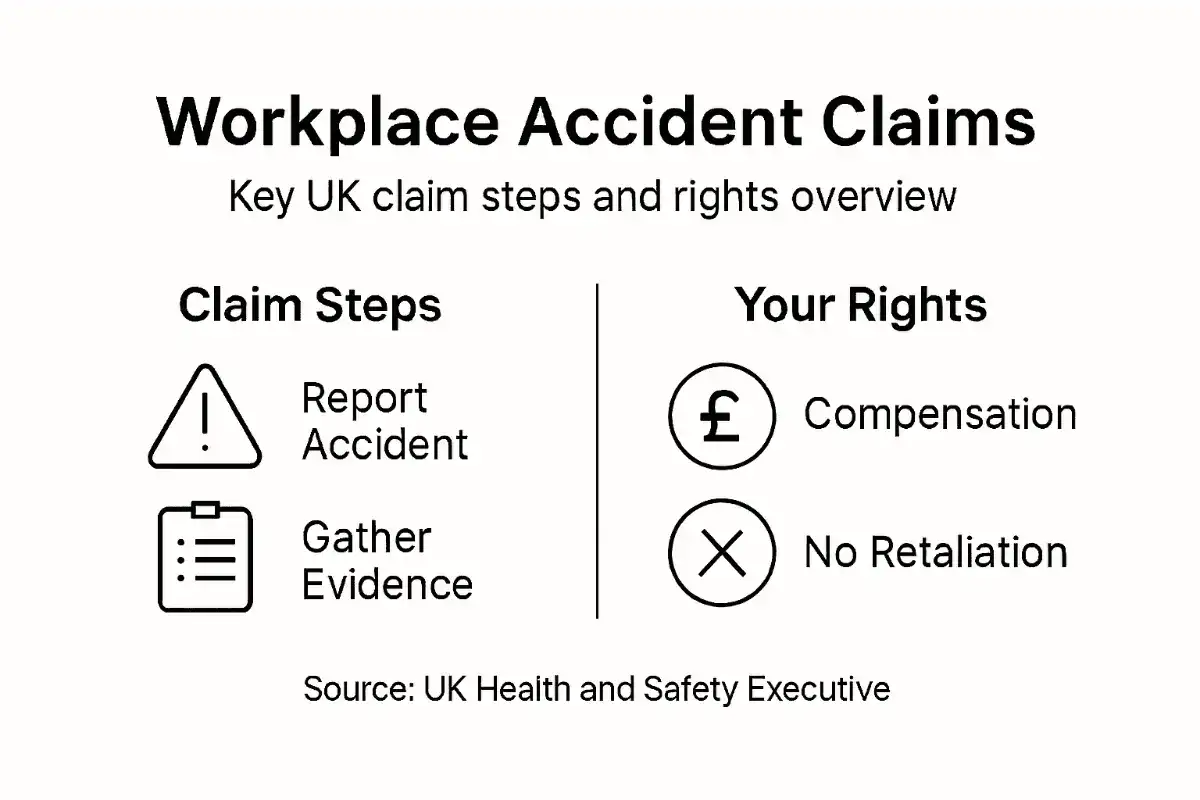
Making a workplace accident claim requires reporting to your employer, gathering evidence, and contacting a solicitor before the three-year deadline passes.
Contact a personal injury solicitor once you’ve gathered initial evidence. Many offer free consultations and operate on a no-win-no-fee basis, meaning you pay nothing unless your claim succeeds. A solicitor handles negotiations with the employer’s insurance company and manages legal paperwork.
Most workplace claims settle through negotiation rather than court proceedings. Your solicitor will exchange evidence with the other side, discuss the injury’s impact, and work towards a fair settlement. This process typically takes several months but avoids the uncertainty of litigation.
Key legal requirements include:
- Filing your claim within three years of the accident
- Proving your employer was negligent
- Demonstrating the accident caused your injury
- Showing you’ve suffered losses through lost earnings or medical costs
Compensation payments for workplace injuries may be tax-exempt under specific conditions, benefiting your final settlement. Your solicitor ensures the settlement structure maximises your tax position.
If settlement negotiations fail, your case proceeds to court. A judge reviews evidence from both sides and awards compensation if your claim succeeds. Whilst court cases take longer, they sometimes result in larger awards than negotiated settlements.
Pro tip: Gather medical evidence, witness statements, and accident photographs within two weeks of your injury—the sooner you act, the stronger your claim becomes as details remain vivid and witnesses are easier to locate.
Employee Rights and Employer Responsibilities
Your employer owes you a legal duty of care. This isn’t just good practice—it’s a binding legal obligation under the Health and Safety at Work Act 1974. Understanding what your employer must do protects your rights when accidents occur.
Employers must maintain safe working conditions at all times. This means conducting risk assessments, identifying hazards, and taking steps to eliminate or minimise them. If your workplace lacks basic safety measures, your employer is already failing their legal duty before any accident happens.
When a workplace accident occurs, your employer has immediate responsibilities:
- Providing first aid assistance straight away
- Recording the incident in the accident book
- Reporting serious injuries under RIDDOR if applicable
- Investigating what caused the accident
- Cooperating with Health and Safety Executive inspections
- Preserving evidence of the incident
UK employers must maintain employers’ liability insurance covering compensation claims from injured employees. This insurance exists specifically to protect workers like you. If your employer lacks this insurance, they’re breaking the law.
Your rights as an injured employee are substantial. You have the right to be treated fairly and not face retaliation for reporting an injury or pursuing a claim. Employers cannot dismiss, demote, or discriminate against you for making a legitimate compensation claim.
Employers’ key legal duties include:
- Providing safe equipment and maintaining it properly
- Training employees to use equipment safely
- Ensuring adequate supervision and staffing levels
- Reporting workplace accidents to relevant authorities
- Investigating incidents promptly and thoroughly
- Taking reasonable steps to prevent similar accidents
Many employers fail in their duty through negligence rather than intent. Insufficient staff means rushed work and increased accidents. Outdated equipment breaks down more often. Poor training leads workers to take dangerous shortcuts. These failures form the basis of successful compensation claims.
Your employer’s legal duties exist specifically to protect your health and safety; when they breach these duties and you’re injured, you have a right to compensation.
If your employer retaliates against you for making a claim, this creates additional grounds for action. Protected disclosures about safety hazards receive special legal protection. You cannot be punished for raising legitimate safety concerns.
Documenting your employer’s safety failures strengthens your claim considerably. Keep records of hazards you reported, unsafe conditions you observed, and any near-misses before your injury. This evidence demonstrates your employer knew about risks but failed to address them.
Pro tip: Report all workplace hazards in writing—email or letter creates a documented record that your employer was aware of safety issues, which strengthens your compensation claim if you’re subsequently injured by that hazard.
Risks, Pitfalls, and Financial Implications
Making a workplace accident claim carries real risks if you’re unprepared. Missing deadlines, failing to gather evidence, or misunderstanding the legal process can cost you thousands in lost compensation. Understanding these pitfalls helps you protect your financial future.
The three-year deadline is absolute. Miss it and your claim disappears regardless of how serious your injury. Many workers delay contacting a solicitor, thinking they have plenty of time, only to realise months have passed. Once the deadline expires, no solicitor can help you recover anything.
Common pitfalls that weaken claims include:
- Failing to report the accident to your employer in writing
- Not requesting the accident book entry as proof
- Delaying medical treatment or not seeking formal diagnosis
- Losing evidence like photographs or witness details
- Speaking carelessly about the accident on social media
- Admitting partial responsibility without legal advice
- Accepting settlement offers without proper valuation
Without proper documentation, you face under-compensation or rejection entirely. Insurance companies challenge claims lacking medical records, witness statements, and photographic evidence. Your word alone rarely suffices, even if you’re telling the complete truth. Inadequate reporting and poor investigation expose you to losing compensation you rightfully deserve.
Financial implications extend beyond lost wages. Ongoing medical treatment costs mount quickly—private physiotherapy, medications, and specialist consultations add up. If your injury causes lasting disability, future earning capacity diminishes significantly. A proper claim captures these long-term costs.
Ignoring health symptoms creates lasting problems. Some workplace injuries develop complications months later. Refusing treatment or downplaying symptoms to your employer means insufficient medical records exist when you finally claim. Conditions like repetitive strain injuries or psychological trauma require ongoing documentation to prove causation and impact.
Delaying action or failing to document your injury thoroughly transforms a strong claim into a weak one, potentially costing you tens of thousands in compensation.
Employer retaliation presents another risk. Some employers make workers’ lives difficult after accident claims, hoping they’ll withdraw. Constructive dismissal—where working conditions become unbearable—gives you additional grounds for claims but requires careful documentation of the mistreatment.
Social media mistakes damage claims substantially. Posting about activities contradicting your injury claims gives insurance companies ammunition to dispute your compensation. Photos showing you active or enjoying yourself undermine claims of pain and suffering, even if you’re managing brief moments of activity.
Here is a summary of frequent mistakes and their potential consequences during the claims process:
| Mistake During Claim | Likely Consequence | How to Avoid |
|---|---|---|
| Delayed accident reporting | Claim rejection or dispute | Inform employer immediately |
| Incomplete medical documentation | Underestimated compensation | Seek prompt, thorough treatment |
| Losing witness details | Weakened evidence base | Collect and save all contact details |
| Social media contradictions | Diminished credibility | Refrain from public claims discussions |
| Accepting first settlement offer | Lower overall compensation payout | Consult a solicitor before accepting |
Accepting the first settlement offer without legal advice often means receiving less than you deserve. Insurance companies bank on injured workers accepting inadequate amounts just to resolve claims quickly. A solicitor negotiates higher settlements based on proper valuation of your losses and suffering.
Pro tip: Avoid social media posts about your injury or activity, resist accepting any settlement without solicitor review, and keep every medical appointment documented—these three actions alone prevent the majority of claim pitfalls that cost workers thousands.
Take Control of Your Workplace Accident Claim Today
Suffering a workplace injury through no fault of your own is a stressful and overwhelming experience. The article highlights key challenges like meeting strict time limits, gathering crucial evidence, and proving employer negligence. You also face financial pressure from medical costs and lost earnings. At Mayiclaim, we understand the urgency and complexity of workplace accident claims and can guide you through every step with expert legal support operating on a no-win-no-fee basis.

Don’t let confusion or delay cost you the compensation you deserve. Whether you are dealing with physical or psychological injuries, reporting your accident, or valuing your losses, our experienced solicitors are ready to help you act swiftly and confidently. Start your claim at Mayiclaim and access robust legal representation tailored to UK employees seeking justice. Visit our homepage to get your free consultation today and protect your rights before the three-year deadline passes.
Frequently Asked Questions
What constitutes a workplace accident claim?
A workplace accident claim is a legal request for compensation due to injuries or illness sustained at work, arising from your employer’s negligence or failure to provide a safe working environment.
How long do I have to make a workplace accident claim?
You typically have three years from the date of the accident to file a claim. Missing this deadline will result in the loss of your legal right to claim compensation.
What evidence do I need to support my workplace accident claim?
Key evidence includes medical records, eyewitness statements, photographs of the accident scene, your employment contract and payslips, and any written correspondence with your employer about the incident.
Can I claim compensation for psychological injuries from a workplace incident?
Yes, psychological injuries such as PTSD, anxiety, or stress that arise from a workplace incident are valid for compensation and are treated with the same seriousness as physical injuries.
Recent Comments